
The retail industry is changing faster than ever. Customer expectations are rising, competition is intense, and businesses must operate more efficiently to survive. One powerful technology leading this change is retail automation AI. When combined with retail AI vision automation, it is reshaping how stores operate, manage inventory, prevent theft, and improve customer experience.
In this blog, we’ll explore what retail automation AI is, how retail AI vision automation works, its benefits, real-world use cases, and why it’s becoming essential for modern retail businesses.
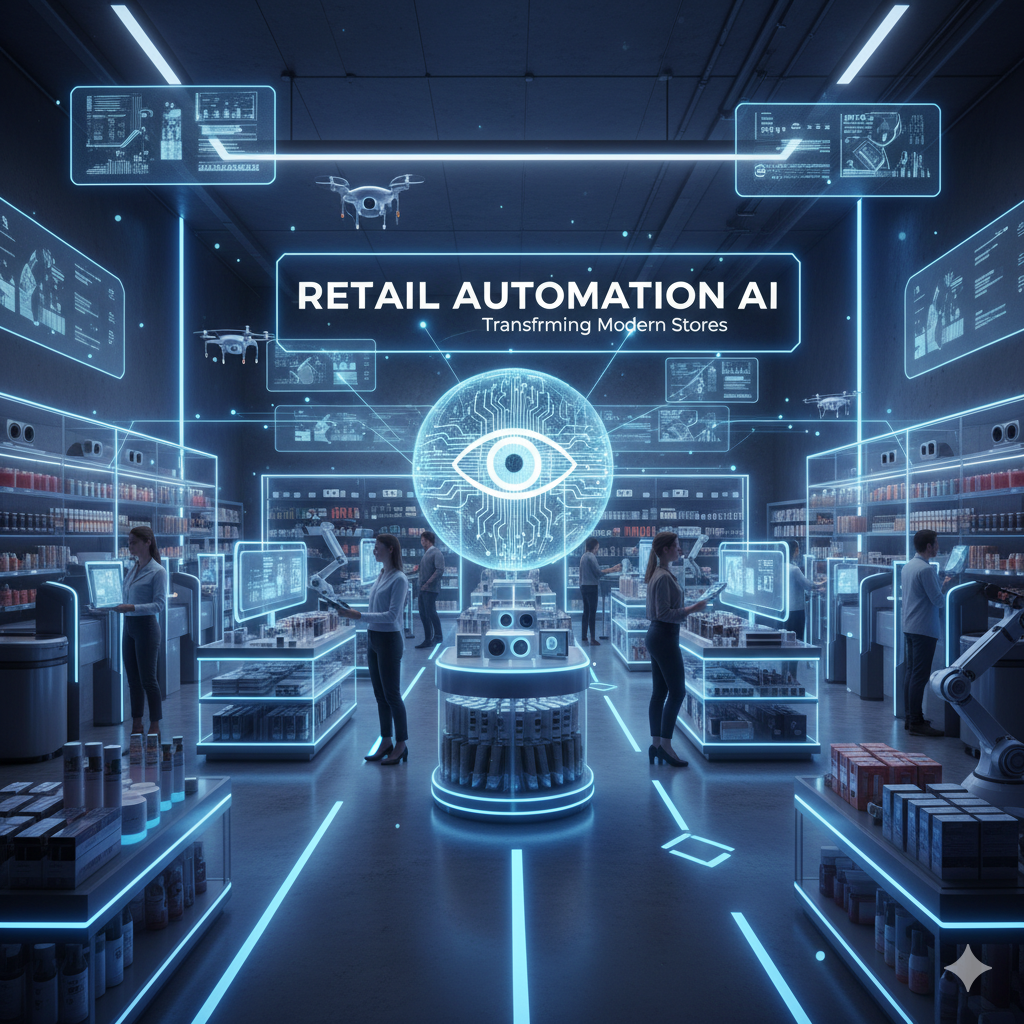
What Is Retail Automation AI?
Retail automation AI refers to the use of artificial intelligence to automate retail operations that were once manual and time-consuming. This includes tasks such as:
- Inventory management
- Customer behavior analysis
- Pricing optimization
- Checkout automation
- Fraud and theft detection
- Supply chain forecasting
AI systems analyze massive amounts of data in real time and make decisions faster and more accurately than humans. This helps retailers reduce costs, increase sales, and deliver better customer experiences.
Understanding Retail AI Vision Automation
Retail AI vision automation is a specialized part of retail automation AI. It uses computer vision—AI that can “see” and understand images and video—to monitor and analyze physical retail environments.
Retail AI vision automation relies on:
- Cameras
- Machine learning models
- Real-time video analytics
- Pattern recognition
These systems can detect people, products, movements, and behaviors without human intervention.
Why Retail Automation AI Matters Today
Retailers face several challenges today:
- Rising operational costs
- Labor shortages
- Shrinkage and theft
- Inaccurate inventory data
- Changing customer buying behavior
Retail automation AI addresses these issues by creating smarter, data-driven stores.
Key Reasons Retailers Are Adopting AI
- 24/7 automation without fatigue
- Improved accuracy compared to manual work
- Lower long-term operational costs
- Faster decision-making
- Scalability across multiple locations
How Retail AI Vision Automation Works in Stores
Retail AI vision automation systems follow a simple process:
- Data Capture
Cameras capture video footage of the store. - AI Processing
Computer vision models analyze movements, objects, and behavior. - Pattern Recognition
The system identifies patterns like customer flow, shelf activity, or suspicious actions. - Action & Alerts
Automated actions are triggered or alerts are sent to staff or systems.
This entire process happens in real time.
Key Applications of Retail Automation AI
1. Smart Inventory Management
Inventory mistakes cost retailers billions every year. Retail automation AI tracks stock levels accurately by:
- Detecting empty shelves
- Identifying misplaced products
- Forecasting demand
With retail AI vision automation, stores can visually confirm inventory levels without manual audits.
Benefits:
- Reduced stockouts
- Better demand forecasting
- Lower carrying costs
2. Automated Checkout and Cashier-Less Stores
Retail automation AI enables frictionless checkout experiences. Cameras and sensors track what customers pick up and automatically charge them.
Examples include:
- Scan-and-go systems
- Vision-based checkout
- Mobile payment integration
This reduces queues and improves customer satisfaction.
3. Theft Prevention and Loss Reduction
Retail theft is a major issue. Retail AI vision automation can:
- Detect suspicious behavior
- Identify repeat offenders
- Monitor high-risk zones
- Reduce internal theft
AI does not rely on human judgment alone, making it more consistent and reliable.
4. Customer Behavior and Heatmap Analysis
Understanding customer behavior is crucial for increasing sales. Retail automation AI analyzes:
- Foot traffic patterns
- Dwell time near products
- Store layout effectiveness
- Popular aisles and dead zones
This data helps retailers optimize store layout and product placement.
5. Personalized Customer Experience
Retail automation AI can identify customer preferences and deliver personalized experiences such as:
- Targeted promotions
- Personalized recommendations
- Smart digital signage
When combined with retail AI vision automation, systems can even detect customer demographics and adjust displays dynamically.
Benefits of Retail AI Vision Automation
Improved Operational Efficiency
Automated systems reduce dependency on manual labor and eliminate human errors.
Real-Time Insights
AI provides instant insights that help retailers make faster decisions.
Cost Savings
Although the initial setup cost can be high, long-term savings are significant.
Scalability
AI solutions can be easily deployed across multiple locations.
Better Customer Satisfaction
Faster service, fewer stockouts, and smoother checkouts improve the overall shopping experience.
Retail Automation AI vs Traditional Retail Systems
| Feature | Traditional Retail | Retail Automation AI |
|---|---|---|
| Inventory Tracking | Manual audits | Automated, real-time |
| Loss Prevention | Human monitoring | AI vision analytics |
| Customer Insights | Surveys | Behavioral data |
| Scalability | Limited | High |
| Accuracy | Moderate | Very High |
Challenges in Implementing Retail Automation AI
While retail automation AI offers many benefits, there are challenges:
- Initial investment costs
- Data privacy concerns
- Integration with legacy systems
- Need for skilled AI professionals
However, as technology matures, these barriers are becoming easier to overcome.
Future of Retail Automation AI
The future of retail is intelligent, connected, and automated.
Upcoming trends include:
- Fully autonomous stores
- AI-powered supply chains
- Advanced facial recognition (privacy-compliant)
- Voice-enabled retail assistants
- Predictive customer demand modeling
Retail AI vision automation will continue to evolve, making stores smarter and more responsive.
Why Retailers Should Invest Now
Retailers who adopt AI early gain a competitive advantage. Delaying adoption can lead to:
- Higher operational costs
- Poor customer experience
- Inability to compete with tech-driven brands
Retail automation AI is no longer optional—it’s becoming a necessity.
Final Thoughts
Retail automation AI and retail AI vision automation are transforming the retail industry from the ground up. They help retailers operate smarter, reduce costs, prevent losses, and deliver exceptional customer experiences.
As customer expectations continue to evolve, retailers that embrace AI-driven automation will lead the market, while those that resist may struggle to keep up.
If you’re planning for the future of retail, investing in AI automation today is one of the smartest moves you can make.
Ready to Grow Your Amazon Business?
Let’s discuss how we can help you achieve your e-commerce goals
